Integrating AI into iOS Applications: A New Hype in Mobile Technology
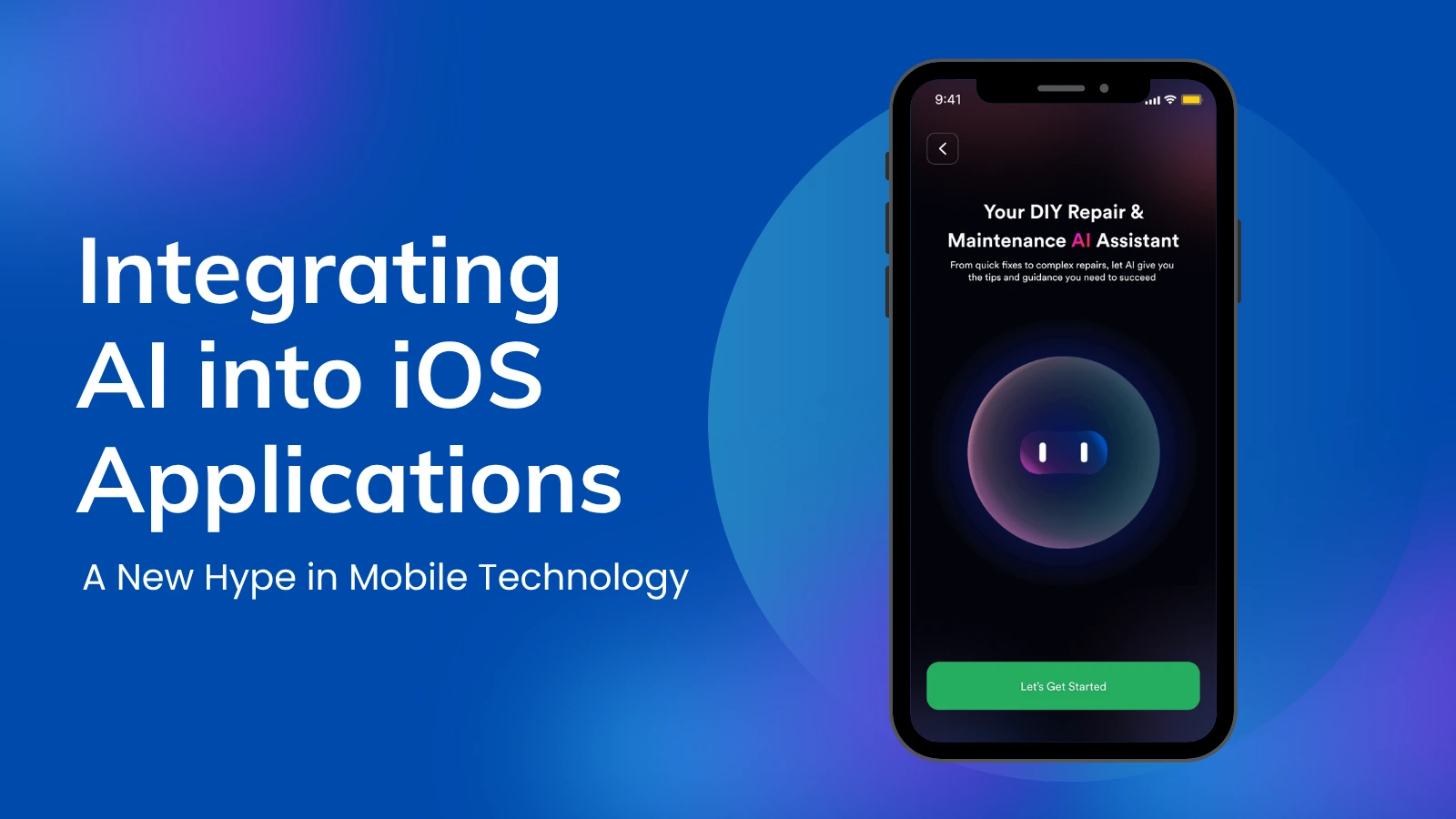
Introduction: Brief about the iOS app development topics and how integration of the AI technology is garnering a lot of attention in mobile applications
Understanding AI: Explain what AI is and its applications in mobile apps
This is simply a new branch in technology that focuses on algorithms and trailers to perform complicated human tasks. The mobile apps x sectors usually involve these things. Algorithms to draw logic - objects: advanced reasoning and distilling steps to amend errors: smart self waiving functionalities.
In mobile applications, AI is revolutionary. It enables features such as customer service chatbots as well as virtual assistants that can help users with their daily routine tasks.
Also, AI can examine user activity on the application in real time. This means that apps can make recommendations that relate to each user's specific tastes. A good example are streaming services that suggest shows based on users' watching habits.
Another important example is the image recognition technology used in photography and social media applications. Users can easily tag their friends and use smart filters to enhance images effortlessly.
AI's adaptability makes it a great resource for most areas in mobile app development. An example is e-commerce apps, where AI can be applied to refine the shopping experience by offering tailored recommendations. This can enhance sales and user satisfaction.
In healthcare applications, AI can help with medical diagnosis by evaluating the available symptoms and medical history of the patients. It can assist physicians in tracking progress and recommending management plans.
In navigation applications, AI is used for updating traffic information in real time, optimizing routes, and providing voice directions which are some of the major functions of the apps. AI has advanced the quality of mobile gaming applications. It allows for the creation of dynamic and adaptive environments based on the player's actions which makes the gameplay realistic and challenging.Also, mobile applications are using AI for security purposes. For instance, banking applications use face recognition to confirm a user’s identity, therefore, preventing any possible fraud.
To illustrate, the different functions of AI in mobile applications increase their efficiency, customization, and convenience. With the ongoing development of technology, innovations we have not imagined will be available at the tips of our fingers thanks to mobile applications.
Benefits of AI Integration in iOS Apps
The use of Ai in iOS apps comes with several offers that are capable of changing user engagement. One of the offerings is a bonus user experience. With the help of machine learning powered algorithms, Ai based applications are capable of learning and adapting to users’ likes and building smarter and friendly interfaces.
A considerable amount of improvement is witnessed from enhanced accuracy. Every task that was once solved one at a time by each app can now be done in bulk by ai applications. Because this focuses on the basic principles of operation, applications are speedier, and more dependable.
Individual user engagement is enhanced with personalized features. Apps can offer tailored recommendations leveraging user behavior and past interactions using predictive analytics. This kind of personalization makes the users feel appreciated and bolsters loyalty
In addition, the app itself can make smarter decisions when AI is incorporated. It can analyze data quickly, which improves the functioning and performance of the app, therefore, making it smarter.
In addition to those systems, AI applications can enhance security features on iOS apps. With the ever-growing cyber threat, AI-powered protective frameworks can be very useful in detecting and stopping security threats, thus safeguarding sensitive information.
AI also brings about saving costs. Apps can automate processes and therefore reduce human resource dependence, which saves money for companies.
AI also allows for perpetual upgrades and improvements. Machine learning algorithms can be used by apps to automatically analyze and learn about users so that the insights can be used to improve the experience by adjusting the functionality of the app. This guarantees that the app does not become obsolete, but adjusts with user expectations.
Finally, the use of Artificial Intelligence in iOS applications can create new opportunities for companies. The more sophisticated characteristics of NLP and image recognition can now be added in the apps, inciting further creativity. Such possibilities within a competitive market are beneficial for new companies looking to make their mark.
As discussed in this paper, AI development services implementation in the development of iOS apps has myriad advantages in improving the user economy and experience, efficiency, customization, and user retention. Additionally, there are AI driven improvements in making autonomous and guided decisions, enhancing safety protocols, decreasing expenditure, facilitating constant change, improving the service, and exploration of new avenues. The ever-advancing swiftly changing technological landscape calls for the proactive application of Apple’s cutting-edge technologies in iOS Apps to remain relevant and gain a competitive edge.
Some Successful AI Integrated iOS Apps:
Add some successful AI integrated iOS apps like Siri, Google Maps, and Spotify
Siri, Apple’s voice-activated assistant, is a prime example of AI integration in iOS apps. It learns from user interactions and adapts to user preferences. This aspect furthers ease of access and multitasking performed in a daily routine.
Google Maps is enhancing navigation with their AI features. Predictive routing and real-time traffic updates assist users in sidestepping busy areas. The application is able to adapt in real-time.
AI is also used by Spotify to enhance the experience of listening to music. Its recommendation engine builds new playlists based on user activity and resonates with personal preferences. Discover Weekly is one of the many examples that shows how well it understands its listeners’ needs.
These two examples show how greatly AI improves an iOS app's functionality by making them more sophisticated yet simple to operate, providing users with an intuitive interface that is easy to navigate.
How to Integrate AI Into an iOS App Development Project
Provide step-by-step instructions guiding to include AI in the given project description.
Begin the development of the iOS app with AI integration by outlining the goal of the application. Consider in what way AI will improve usability features of the application.
Now it is time to select the appropriate AI framework. Core ML and TensorFlow Lite are well-liked by developers and can easily be embedded into iOS applications.
Once you have chosen a framework, the next step is to gather the necessary data. Ensure to clean your data by removing inaccuracies so that the AI can learn optimally from it.
Next, implement machine learning models based on your project’s requirements. Use relevant datasets to train these models and achieve the desired outcomes.
After your training is done, embed the model into your app’s codebase. Make sure to test its performance in various scenarios to improve interaction for the users.
At last, observe how users interact with the AI features post-launch. Collect insights to improve and add more features in the next updates.
Step 1: Describe the objective of your application
The first thing to do while developing an iOS app with AI is to define the purpose of your app. This will enable you to spot areas where AI can be used to improve functionality or user experience. For instance, if you’re building a fitness tracking app, AI could evaluate info provided by the users and automate personalized workout plans.
Step 2: Choose the right AI framework
After you have defined the purpose of your app, pick an AI framework that best fits your project. Developers often prefer Core ML and TensorFlow Lite due to their easy usage with iOS apps. Each framework has its advantages and disadvantages, so make sure to understand them before you make up your mind.
Step 3: Collect and Organize Data
In order to build an effective machine learning model, one will need to collect and curate a great deal of relevant data. Raw data also needs to be cleaned to ensure it's correct and well-organized. Entering incorrect information would lead to wasteful processing and the model's performance quality would suffer. Hence, the thorough and accurate collection of relevant data is crucial.
Step 4: Build machine learning models
When setting up an AI project, first prepare the project scope, then select an appropriate framework and at last build the machine learning models. This can be done either by crafting fully customized solutions or with the aid of ready-to-use models available in resources like the Core ML Model Zoo.
Step 5 : Train the models
After implementing the models, it is time to train them using the prepared data. This process involves feeding the data into the model and adjusting its parameters to achieve desired outcomes. The more diverse and relevant your training data is, the better your model will perform.
Step 6: Integrate the model into your app
Once training is complete, integrate the model into your app's codebase. This may involve writing custom code or using APIs provided by the framework. Make sure to test the integration thoroughly and make any necessary changes to optimize performance.
Step 7: Monitor user engagement
After launching your app with AI integration, continuously monitor how users are interacting with its features. Gather feedback and use analytics tools to track usage patterns and identify areas for improvement.
Step 8: Update and improve
Based on user feedback and analytics data, make updates and improvements to your AI models and app features. This will ensure that your app stays relevant and continues to provide a seamless AI experience for users.
In conclusion, developing an iOS app with AI integration requires careful planning, implementation, and monitoring. By following these steps, you can create a powerful app that harnesses the capabilities of AI technology to enhance user experience.
Combining Different Components of the System: Discuss the problem areas that developers might run into when incorporating AI as a component
Integrating AI into iOS app development is not without its hurdles. Many different issues from technology constraints, scope changes, limited time and budget, inadequate infrastructure to the requirements fulfilling the expectations of various stakeholders all stem into creating what can become an extremely messy and complicated situation.
A specific area of concern is mentioned above. The majority of current implementations of AI technologies incur an enormous cost. AI technology is extremely data hungry. Algorithms must extract statistical data from huge datasets in order to learn and be able to predict future events. When flawed systems, bad data, and poor algorithms are paired together the accuracy significantly drops while changing the user experience for the worse. Highly relevant data needs to be tailored and curated which creates a whole different challenge.
The other problem has to do with the technical parts. In order to design AI features, it is important to have sufficient knowledge in machine learning and artificial intelligence. Such skills are not always available with a standard iOS app development company. This lack of knowledge can cause problems with timely delivery or poor quality execution.
Moreover, there is a problem with privacy and the security of user data especially when AI features are added. App makers always have to deal with strict laws, which makes it very hard to ensure that a user’s private data is safe during the data processing stages.
Following rapidly changing technology can be another issue. The AI industry is growing unlike anything we have seen before, meaning that what works well today could be useless tomorrow. Keeping up with new trends and tools requires additional work from developers.
All these challenges can add significant value to the mobile apps if addressed properly. Solving these problems can enable the design of apps that enhance the user experience in the modern digital world.
More Blogs
Expert AR VR App Development Company Crafting Next-Level Immersive Applications
No longer science fiction buzzwords, Augmented Reality (AR) and Virtual Reality (VR) are becoming defining technologies across industries from gaming and education to healthcare and enterprise training. The biggest challenge, though, h...
The Role of Blockchain & Web3 in Transforming Services Offered by Metaverse Development Services
The metaverse has rapidly become more than simply a catchphrase of the future—it is a new model for digital connection, commerce, and imagination. Although virtual reality and 3D spaces bring the metaverse to life, the true shift...

From Vision Pro to Niche Apps: AR/VR Trends Powering 2025 and Beyond
2025 is poised to become a watershed year for virtual reality (VR) and augmented reality (AR). What was futuristic technology is now deeply ingrained in mainstream dialogue, not only among technology aficionados but also within busines...

 Awards & Recognition